
- -40%
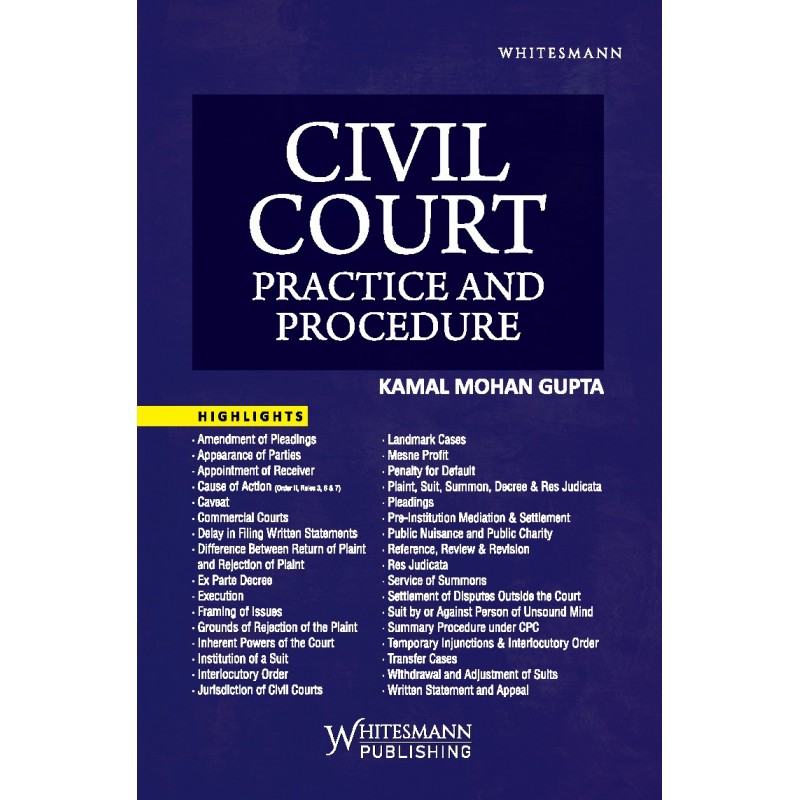
HIGHLIGHTS
· – Amendment of Pleadings
· – Appearance of Parties
· – Appointment of Receiver
· -Cause of Action (Order 1, R 3,887)
· – Caveat
· -Commercial Courts
· – Delay in Filing Written Statements
· Difference Between Return of Plaint and Rejection of Plaint
· Ex Parte Decree
· – Execution
· – Framing of IssUBS
· -Grounds of Rejection of the Plaint
· – Inherent Powers of the Court
· -Institution of a Suit
· Interlocutory Order
· – Jurisdiction of Civil Courts
· Landmark Cases
· Meat Profit
· Penalty for Default
· Plaint, Suit, Summon, Decree & Res Judicata
· Pleadings
· Pre-Institution Mediation & Settlement
· Public Nuisance and Public Charity
· Reference, Review & Revision
· Res Judicata
· Service of Summons
Civil court practice and procedure encompasses the rules and processes that govern how civil lawsuits are handled in court. This includes everything from filing a case to its resolution, whether through settlement or trial. Understanding these procedures is crucial for both legal professionals and individuals involved in civil litigation.
Here’s a breakdown of key aspects of civil court practice and procedure:
1. Filing a Lawsuit:
· Consult a lawyer:
It’s recommended to consult with a qualified lawyer to assess the merits of your case and guide you through the process.
· Drafting the Plaint:
The plaintiff (the person filing the lawsuit) prepares a document called a “plaint” which outlines the facts of the case, the legal basis for the claim, and the relief sought from the court.
· Filing in the appropriate court:
The plaint is filed with the court that has jurisdiction over the matter, based on factors like the location of the dispute or the amount of money involved.
· Issuance of Summons:
The court then issues a summons to the defendant (the person being sued), notifying them of the lawsuit and requiring them to appear in court.
2. Pleadings and Discovery:
· Written Statement:
The defendant files a “written statement” responding to the allegations in the plaint.
· Discovery:
This phase involves both parties gathering information relevant to the case through various methods like document requests, interrogatories, and depositions.
· Interlocutory Proceedings:
These are preliminary hearings or motions filed by either party to address specific issues before the triaL