
- -40%
- New
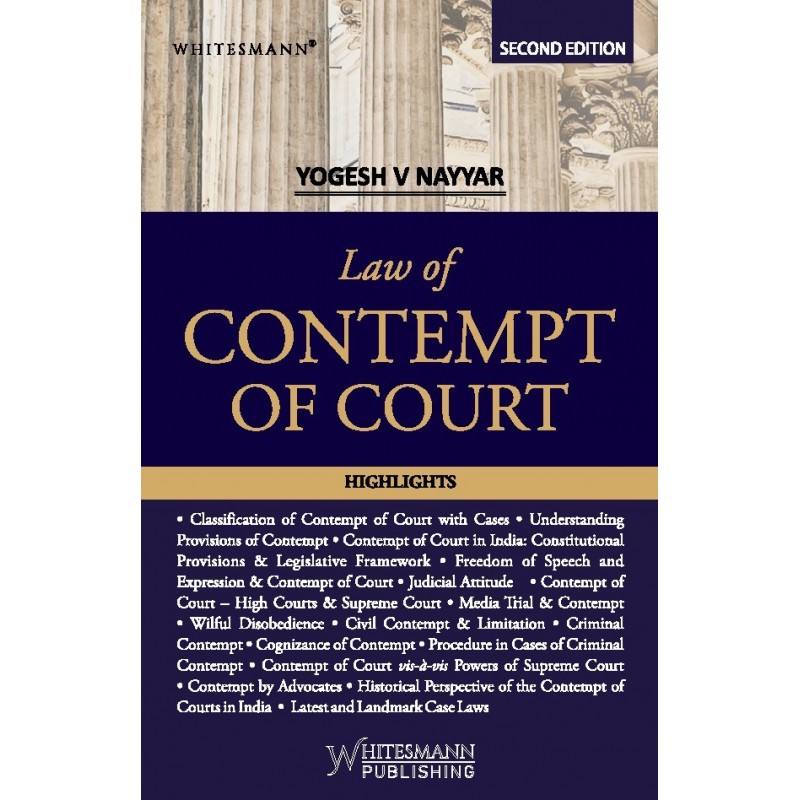
Key Highlights
Updated Case Law: Features recent precedent from the Supreme Court and various High Courts.
Statutory Thresholds: Highlights crucial procedural limits, such as the 1-year limitation rule and specific penalty caps.
Practical Defenses: Outlines actionable legal defenses against civil and criminal contempt allegations.
Media & Free Speech: Addresses the boundary between legitimate critique, media reporting, and illegal interference with justice.
Core Framework & Classifications:
Civil Contempt: Focuses on the willful disobedience of court orders, judgments, decrees, or directions.
Criminal Contempt: Covers acts or publications that scandalize the court, prejudice judicial proceedings, or obstruct the administration of justice.
Constitutional Validity: Details how the framework aligns with Article 225 of the Constitution of India, balancing judicial authority against individual rights like freedom of speech and expression.
Procedural & Defense Mechanics:
Limitation Period: Notes that courts cannot initiate contempt proceedings after the expiry of one year from the date the alleged act occurred.
Penalties: Details the maximum punishment allowed under the Act—up to six months of imprisonment, a fine of up to ₹2000, or both.
Strategic Defenses: Analyzes valid legal defenses, such as proving a lack of awareness of the contemptuous nature of an act or demonstrating necessity/self-defense.
Specialized Themes Covered:
Intersecting dynamics between media trials, freedom of expression, and contempt of court.
Contempt powers specific to High Courts and the Supreme Court.
Ethical guidelines, liabilities, and precedents regarding contempt by advocates.
A historical view of contempt law alongside recent, landmark Supreme Court and High Court judgments.
Key Highlights
Updated Case Law: Features recent precedent from the Supreme Court and various High Courts.
Statutory Thresholds: Highlights crucial procedural limits, such as the 1-year limitation rule and specific penalty caps.
Practical Defenses: Outlines actionable legal defenses against civil and criminal contempt allegations.
Media & Free Speech: Addresses the boundary between legitimate critique, media reporting, and illegal interference with justice.